An effective sales and marketing strategy begins with a clear understanding of the target market.
Before introducing a product or service, a business should understand who its potential customers are, what they need, what problems they are trying to solve, how they make purchasing decisions, and what factors influence their choices.
Market size, competition, pricing, purchasing power, distribution channels, economic circumstances, and changing consumer behavior should all be considered when developing an appropriate strategy.
At the same time, understanding the market is not enough; it is equally important to understand the customer as an individual or organization. Every customer has different priorities, expectations, financial circumstances, concerns, and decision-making criteria. Professional sales therefore require the ability to listen carefully, identify the customer's actual requirements, and present a product or service according to the value it can genuinely provide.
The objective should not simply be to complete a transaction, but to establish confidence and create the foundation for a long-term business relationship.
Public Relations and Professional Communication
Strong public relations and communication skills play an essential role in developing successful commercial relationships.
Customers are more likely to work with businesses and representatives they consider professional, reliable, knowledgeable, and responsive.
The way a company communicates before, during, and after a transaction can significantly influence its reputation in the marketplace.
Good communication also involves more than speaking persuasively. It requires the ability to listen, ask appropriate questions, understand concerns, negotiate professionally, respond accurately, and maintain constructive relationships even when difficulties arise.
Promises and commitments should be realistic and, once made, should be respected. Reliability is one of the strongest foundations for customer confidence.
Psychology and Understanding Customer Behavior
Sales and marketing also involve an important element of general psychology and human behavior.
Purchasing decisions are not always based entirely on price or technical specifications. Trust, previous experience, perceived value, convenience, reputation, confidence, risk, personal preferences, and emotional considerations can all influence a customer's decision.
Understanding these factors enables a sales professional to communicate more effectively and appropriately. This does not mean placing pressure on customers; rather, it means recognizing their motivations and concerns and helping them make an informed decision that is suitable for their circumstances.
Professional selling should create value for both parties and contribute to a relationship in which the customer feels respected and understood.
Cultural Awareness and Business Etiquette
In international and multicultural markets, cultural awareness and business etiquette become particularly important. Communication styles, negotiation practices, attitudes toward time, hierarchy, personal relationships, formality, hospitality, and decision-making processes can vary considerably between countries and cultures.
A method that is successful in one market may therefore be inappropriate in another. Understanding and respecting local customs and cultural expectations can prevent misunderstandings, strengthen relationships, and demonstrate professionalism. Businesses seeking to enter new markets should adapt their approach without compromising their fundamental values or professional standards.
Commitment, Performance and Follow-Up
Successful sales cannot be separated from performance and commitment. Marketing may generate an opportunity and sales may secure an order, but customer satisfaction ultimately depends on whether the business delivers what has been promised.
Professional follow-up is therefore an important part of the sales process. Maintaining communication after a transaction, responding to customer concerns, obtaining feedback, and identifying future requirements can transform a single sale into a continuing commercial relationship. Existing satisfied customers can also become an important source of repeat business, recommendations, and positive reputation.
For this reason, sales performance should not be measured only by immediate revenue. Customer retention, profitability, market development, satisfaction, repeat orders, quality of relationships, and long-term business potential are also important indicators of success.
From Selling Products to Creating Value
Modern sales and marketing should ultimately focus on creating value rather than simply selling products.
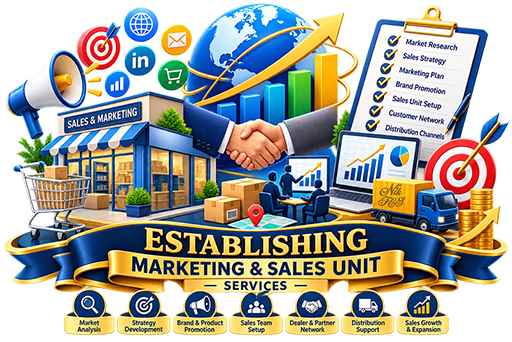
A professional approach brings together market research, customer understanding, appropriate positioning, communication, relationship management, negotiation, cultural awareness, reliable performance, and continuous follow-up.
When these elements are properly coordinated, sales and marketing become much more than promotional activities. They become a strategic business function capable of developing markets, strengthening customer loyalty, improving competitiveness, supporting sustainable revenue, and building a respected commercial reputation.
The most successful sales relationship is not necessarily the one that produces the fastest transaction, but the one in which both the business and the customer recognize lasting value in continuing to work together.